Sunday, July 31, 2011

Me and the Cap'n, Makin' it Happen


What a week, what a week, what a week. What a month, really. Without going into the boring details, the last two weekends were consumed with non-moviegoing commitments, but I'm making up for it in earnest. Reviews are forthcoming of the films I saw yesterday (which ran the gamut from awful to pretty good, so it wasn't exactly a banner day), but in the meantime, I have reviews for A Little Help, Captain America, and Cowboys & Aliens posted at Battleship Pretension. I wish I could recommend any of them in earnest, but at best they offer small pleasures and a certain earnestness that can be charming at times.

Had I more time or sufficient enthusiasm, I'd have had a piece about Attack the Block up weeks ago. I loved the film, don't get me wrong, but given the assault on the Internet the film has committed since its debut at SXSW, another review saying it's a near-perfect genre film and one of the most entertaining pictures of the year seemed unnecessary. Just know that if you're looking for the best summer entertainment for your buck and have the good fortune of living in a town in which it's playing, look no further.

Sunday, July 24, 2011

Criterion on Hulu: The Devil and Daniel Webster

I had the good fortune of seeing The Devil and Daniel Webster for the first time this week. I resisted watching this movie for a long time, and eventually came around to it almost out of obligation - first, because of its place in the Criterion Collection, and second, once a movie gets mentioned by enough people whose tastes you admire, its place in the cannon rises considerably. The classic story of a man, (here, Jabez Stone, played by James Craig) who sells his soul to the devil (portrayed by Walter Huston) for fame and fortune but eventually finds despair never much appealed to me, for reasons I'll get into later, but...wow...I'm glad I took the plunge on this one.

The Devil and Daniel Webster had a wild ride from its initial success - critically, though not commercially - to near-obscurity. It was originally released under the title All That Money Can Buy not only to remove the word "devil" (which didn't play well in the South), but also to distinguish itself from The Devil and Miss Jones, which had been released that same year (and is one I highly recommend). Over the next ten years it was known by several names, from Mr. Scratch to A Certain Mr. Scratch to Here is a Man. One could have missed its running at a local theater and never known it. In 1952, it landed on a semi-permanent name through a re-release that removed over twenty minutes and several key scenes. Daniel and the Devil reportedly shrunk both the Devil and Daniel Webster's roles in the film, and nearly decimated the film's most striking tonal achievements. That version was thought to be the only one in existence until 1990, when a full-length 16mm print was discovered, which has since become the basis for future releases.

Though The Devil and Daniel Webster seemed a near-afterthought for its studio, RKO, in the years following its release, the opposite could not possibly have been more true during its production. The cinema of the 1930s, with the invention of sound, was characterized largely by people in rooms talking, and it would take a decade before filmmakers were able to capitalize on the visual freedoms their silent counterparts had enjoyed, and it took directors such as William Dieterle to do it. With The Devil and Daniel Webster, I would Dieterle did as much for sound film as Orson Welles had the same year (and at the same studio) with Citizen Kane. In parts, the editing (under the guidance of Robert Wise, also fresh off Kane), is shockingly aggressive and experimental, giving us a visceral window into Jabez's uneven hold on reality, sanity, reason, and his very soul. Other times, Dieterle is wonderfully patient, allowing tension to build within a space while his camera simply takes it all in. Meanwhile, Bernard Hermann's Academy Award-winning score (his only Oscar, competing against his own work in Kane no less) dances along, itself teetering on the brink of insanity and the edge of damnation. The whole film is remarkably free-wheeling cinema that seems to be the successor of the silent era (especially in abandoning reality in favor of symbolism and fantasy) while still capitalizing on sound's innovations.

But what I like best about the film is how it treats Jabez's plight. The classic Faustian set-up runs one of two ways. One is that the Devil tricks the protagonist into a raw deal, wherein your success comes only at a great cost to someone you love, or something along those lines. The original short story upon which the film is based takes the second tact - Jabez's only plight is that eventually the Devil comes to collect. In the intervening time, he only gets more successful and more popular. That whole time is pretty much skimmed over as "and things went well." Both of these scenarios let the audience off the hook. We can recognize some sort of basic moral, but in the end simply say, "well, if the Devil ever came to MY door, I'd turn him away (but good thing that will never happen)."

In this film, it's a different story altogether. While Jabez initially takes joy in his prosperity, and has no hesitation in sharing it with others, he soon gives over completely into a materialistic lifestyle, giving no regard to those who used to be his friends. When the Devil sends a temptress (played by the ever-captivating Simone Simon), he wastes little time before making her his mistress. His deal with the Devil plays out exactly as planned, and everything bad that happens from there on out is entirely his doing. And so the classic deal with the Devil story becomes something more than a cautionary religious tale - it becomes a tale of one's moral responsibility as a member of a society. Sure, it leans a little heavy on the idea that riches spoil a man, but it still allows for the possibility that good could have come of his wealth, if only he hadn't allowed his good fortune to give way to greed. All of the conflict of the story is rooted firmly in Jabez, and his moral weakness, so rather than the audience saying "oh, that darned Devil," we can see something of ourselves in that, something of the world around us, in which the wealthy do everything they can to keep the money on their side of the table.

It's a much more interesting take on the Faust tale, made all the better by Dieterle's supreme command of his craft. I've yet to see the film on Criterion's DVD, but the monochrome HD transfer on Criterion's Hulu channel is magnificent. The black levels, perhaps, are not as deep and abyss-y as one would like in certain shots, and there are some digital artifacts (compressions, etc.), but most of the time it felt a lot like watching an actual print. I was amazed to find out that a 16mm print has provided the basis for parts of this film (a better, 35mm version of the short version was used where possible, and the splicing between the two versions might account for the varying quality). It's as beautiful and clean a black-and-white presentation of such an old film (70 this year!) as I've seen from a streaming service.

The audio fares a little worse - there's a constant hiss throughout - but the dialogue is clear and Bernard Hermann's score is thundering. I eventually had to turn it down to spare the neighbors, but I loved soaking in the noise.

This is a different sort of thing that I really love from Criterion's Hulu channel. It presents an upgrade of one of their classic titles (the DVD was released in 2003), free perhaps from the bells and whistles of a Blu-Ray perhaps, but no less satisfying. I don't know if the HD presentation indicates a future Blu-Ray release, but for now, it's great to have available.

Tuesday, July 12, 2011

Netflix - The Best Barely Acceptable Way to Rent Movies


Ahhhhh...those were the days.

In case you haven't heard, Netflix has completely changed their pricing structure, and unless you were already on the streaming-only bandwagon, you will have to pay more for what you currently get. That's the way of the world. Eventually things get more expensive. Netflix, naturally, is trying to spin it as their "cheapest option ever," and while, yes, $7.99/month is the cheapest they've ever made an unlimited disc rental plan, the fact still remains that last week you could pay $9.99 and get all that with unlimited streaming. If you sign up today, that same plan will cost you $15.98.

And again, I say, that is the way of the world. Inevitably, Netflix was going to have to raise their prices. Streaming is way too lucrative for studios to not ask Netflix for more money, so on one hand, saying this is a huge greedy pull on Netflix's part is some form of ignorance, willful or otherwise. I do think there is some truth to the cries of "greed" in HOW Netflix chose to raise their prices.

For the past 18+ months, Netflix has made it very clear that streaming is the future. They've so buried the fact that they're a DVD rental company that, even now, there is a question in their "how it works" section that reads, "Can I get DVDs by mail from Netflix?" It's in their "Other" section.


And this is where we start of have problems.

There's very little that's wrong with their instant streaming plans. They offer an enormous selection for a very reasonable price, and it just keeps getting better. Next year, they'll have an original TV series, House of Cards, produced by David Fincher and starring Kevin Spacey. Even if they bump it up to $9.99 by then (and I expect they will), it'll still be an unbelievable value for those of us who remember the dark days of spending $3-$4 per disc every time we wanted to rent a movie. Now I can barrel through a season of television over a weekend, or school myself on some classic silent cinema in a couple of nights. It's all right there.

But in the wake of this, Netflix's quality of service in their DVD (and especially their Blu-Ray department) has completely shit the bed, and they seem content (sometimes intent) on shutting down their DVD division, which would save them boatloads of money (think of the facilities and people they'd no longer have to pay for!). I would have no problem paying $15.98/month for streaming and discs if I was actually able to rent the movies I wanted to rent. The problem is, they're asking us to pay more for an increasingly dwindling service.

I resisted Netflix for a long time, and for a lot of reasons, finally signed up in September of 2007. The biggest one is that they had everything. I had recently started diving into the classics of foreign cinema, and their selection was overwhelming. And I adored and defended and celebrated their service vigorously over the last three years. When I like what I'm getting, I make sure people know about it. And equally, when that service declines, I have no problem turning right around on it.

The past year with Netflix has blown. They added an extra charge for Blu-Ray use - fine - but then stopped carrying many new Blu-Rays, especially of classic films. First the Criterion Collection got thrown under the bus, then I found I couldn't rent Bridge on the River Kwai, Fantasia, and many other great, classic titles being released in premium editions. They also started removing DVD titles from circulation altogether. The Tenant, avant-garde film collections, even Droopy cartoons for God's sake!

I've been slowly finding a way to break up with Netflix, and that started with a free trial to Blockbuster online, which doesn't have a perfect selection, but is light years ahead of where Netflix is now. So far I've rented Fantasia, Shock Corridor, Pandora and the Flying Dutchman, The Bridge on the River Kwai, Blow Out, Amarcord, Insignificance, and People on Sunday. All on Blu-Ray. None of them were available on Netflix. And these are all very recent releases. I fully intended to cancel my subscription, as their base price of $11.99 was a little more than I could swing, and they instantly offered me the same plan at $8.99. Sold. No questions asked. I'm in the process of porting over my queue from Netflix, and have encountered very few instances in which I've had to let something go. I've encountered far instances in which I've been able to add discs I never had with Netflix.

And while I'm keeping Netflix for streaming purposes, I've also added Hulu Plus in as well, and I cannot recommend this highly enough. As an alternative to cable, it's been a dream, and with the addition of The Criterion Collection to their service, it's been like a jukebox of classic cinema - all my favorite hits, plus many I never would have discovered otherwise.

We live in a paradise for film fans these days, but only if there are services available to enable it. Blu-Ray offers far and away the best quality available, but Netflix seems content with delivering the lowest. And for those of us with the set-up and the passion for cinema, that's simply unacceptable. That they are now charging even more for a service that seems determined to only get worse is the final insult. I'm canceling my DVD plan with them (which I'm sure has been their plan all along...eventually so many people will cancel that they'll be able to shut down their DVD division under the guise of "insufficient consumer support"). I've said it before - I'd gladly pay $20 for one service that gives me everything (by which I mean a sizeable streaming option and every disc on the market), and I think a lot of other people would, too.

The latest move by Netflix doesn't surprise me in the least after seeing their service circle the drain for the last year. I am somewhat surprised that they think this is a viable business option. Streaming is the future - for now - but we've seen what happens when other companies put all their eggs in one basket. I'm especially thinking of Blockbuster's in-store service, which dispensed with classic movies in favor of nine hundred copies of whatever was new that week, which made a lot of sense for a long time. Until suddenly it didn't.

Admittedly, yes, I should cancel my streaming service in protest. Unfortunately, I'm too poor to seek another option. Trust me, if I could afford to shell out to rent movies as often as I stream them, I'd be gone in a heartbeat. But until then, my constantly fluctuating viewing requirements have created a need for Netflix Instant. And that's just the way they want it.
Saturday, July 9, 2011

Transformers: Dark of the Moon (dir. Michael Bay)


There are no words to describe how awesome that scene is.

So far no one has taken me to task for my very positive review of Transformers: Dark of the Moon. I take that as a sign that either I've so convincingly made my case that every reader has stood there and said "my God, man, how can anyone challenge such reasoning," or no one's plowed through the 1,600-word behemoth (if it helps my cinephile cred, my piece on The Tree of Life was longer, and I once wrote a 10-page paper on Pierrot le Fou...and I LIKED IT). Naturally, I'm choosing to believe the former, though my heart is certain it's the latter.

But enough about me. Transformers: Dark of the Moon is a pretty great li'l flick by one of the most interesting mainstream directors working today. Here's how my review starts...

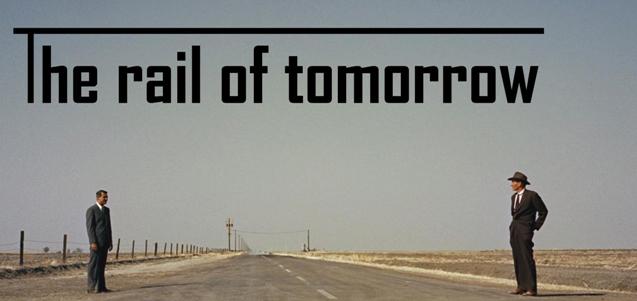
The auteur theory was developed nearly sixty years ago (feeling old yet, Andrew Sarris? HUH?), and yet critics still seem intent on reviewing films as though they were novels or plays, almost totally ignoring or marginalizing the work of the film's supposed author. I'm sure there are reasonable people out there who can acutely dismantle a Michael Bay film on its own terms, but by and large, every review of his career has reflected the same old tired "Bay doesn't understand plot or character argument, which are only valid complaints when Bay is making a film that concerns those elements (hello, Pearl Harbor). Bay's best films (The Rock, Bad Boys II, now Dark of the Moon) approach storytelling differently, starting by taking a page from Hitchcock's method in North by Northwest (oh, I'm going there) - build a plot around action sequences, rather than the other way around. And here, he's chosen to populate his world not with likable characters just tryin' to do some good in this crazy world of ours or people driven to success with a dark side that will undo them (you know, like good little movies do), but with cartoonish, oversized, near-sociopathic assholes.
And there's a good taste of what you're getting yourself into in my review, up now at Battleship Pretension.

Wednesday, July 6, 2011

Larry Crowne (dir. Tom Hanks)


How could anyone hate Larry Crowne? I ask this in spite of the dismal reviews the film has been receiving thus far, and if you don't like it, that's fine. That's your prerogative. It's certainly not a perfect movie - the "romantic comedy" aspect is such a massive afterthought, and the decision to suddenly make that the absolute focal point in act three is a strange one - but it's one of such generosity of spirit and modest ambitions that seeking is destruction seems like a display of excessive force.

Read the rest at Battleship Pretension!

Sunday, June 19, 2011

Green Lantern (dir. Martin Campbell)


You may be surprised to learn this based on the reviews thus far, but Green Lantern is not the worst thing that's ever happened. It's not very good, either, but...come now people.

In particular, I'm sort of surprised that Thor, which had many of the same problems (often-unconvincing special effects, poor storytelling with almost no logic present ever, a terrible romantic subplot), got a huge pass from critics while this got absolutely trounced. I guess some bloated CGI diversions are acceptable, while others are not.

I even sort of liked Green Lantern in parts. Ryan Reynolds is certainly very good as Hal Jordan/Green Lantern, the action, though sadly not as frequent as one would like, is top-notch, and the special effects are actually kind of wonderful. It helps that most of them are supposed to look fake (the power of the Green Lantern is, after all, creating objects out of light, which is exactly what CGI is), but I digress. The biggest thing the film has going for it is absolutely Reynolds, who grounds a film that otherwise is desperate to run away with him in tow. The screenplay is, indeed, a complete mess, the exact result people are desperate for when they bemoan the idea of more than one person writing a film, and the second act in particular is so scattershot, and so frequently unmotivated, that the heavier beats didn't land at all. Peter Sarsgaard plays the film's villain (well, one of them anyway), Hector Hammond, and although his performance is delightfully silly, the film takes his arc waaayyy too seriously, and takes it into some dark territory that is totally ill-fitting with the rather light tone of Hal Jordan's journey.


The other villain is Parallax, which, without rehashing too much of the film's convoluted backstory, is essentially an entity that feeds on fear, and the source of Hal's final confrontation. And this scene in particular gets everything right about the big summer superhero movie. I mean, their battle ends in space. Next to the sun. There are no two ways around that - that is awesome. Really, my chief problem with the film is that there isn't enough that. Green Lantern, as a character, is built for cinema - constructs that appear at the speed of thought aren't nearly as compelling on the comic book page, so every second it can revel in the joy of that creation is a second well spent.

Of course, it would help if the other seconds strung together at all. The prevailing theory is that this was cut down from a much longer cut, and that wouldn't surprise me in the least. There is a LOT of exposition packed into a 105-minute film, and in the process, they've unsurprisingly decided to load up on information-loaded speeches and cut down on character development. Hal is not only the best-formed character in the cast, he's the only one who comes across like a fully-formed person. And I'm fine with stock, one-dimensional characters in big bright CGI movies, but whereas something like Speed Racer embraced its silliness head-on, this is trying to present an actual story with actual people, and it just doesn't fly. So to speak.

Warner Brothers has said they want to replace their nearly-completed Harry Potter franchise with an emphasis on DC superheroes, which is a smart and very overdue move. But they need to realize what made the Potter franchise so successful - strong characters in fantastic situations. The DC characters are sort of famously simple, with much of the nuance added to them decades after their creation, but they still have decades upon which to draw. I hope after this, they use that history to its fullest.

Saturday, June 18, 2011

Criterion on Hulu: The Circus (Charlie Chaplin, 1928)


Hey, welcome to the weekly column digging into the offerings on the Criterion Collection's Hulu Plus Channel. This week, we'll look at Charlie Chaplin's The Circus, which represents a sort of in-between mark of Criterion licensing. When Criterion hinted over a year and a half ago that they'd be putting out new editions of Chaplin's films, there was (rightfully) a lot of celebration. The old MK2 DVDs were serviceable - they sported fine transfers for their time, and included a bounty of extras. But few are able to match what Criterion does, and this was a near-guarantee of seeing these films in high definition.

Among the first offerings by Criterion on Hulu were several Chaplin films - The Great Dictator, Modern Times, A Woman in Paris, City Lights, and The Circus among them - but only Modern Times used a new HD transfer. The rest were sourced from the MK2 discs (I've tried contacting Criterion to see if they plan on updating those files as they create new transfers, but received no response). And while those transfers were serviceable on DVD back in the day, they're pushing it on streaming.

But first, let's dive into the film itself.

The Circus begins with one of Chaplin's finest, most lyrical images - a girl standing on the suspended rings, swinging back and forth as music plays and the credits roll. It's an arresting image to begin on, and it hints at the emotional current of the picture to come. The girls eye project longing for a better future and sadness at her present situation, in which she's stuck swinging back and forth. Though in many ways, this image would be better suited to the Tramp (as much as he advances, he's doomed to regress), having him up there would be more silly than touching.

Chaplin's famous character enters the film as he usually does - out of work, conniving for scraps of food. He'll soon (it's only a 71-minute film after all!) land work in the circus as a performer, though he won't know it. He's instead hired as a prop man and, because he can't help but wreck the whole show, the audience loves him. Chaplin's great victory with the Tramp over his many years is toeing the line between gaining audience sympathy while still letting us laugh at his misadventures, and this film presents that wrought large. The gags absolutely land. Chaplin starts big with a police foot chase that's as clever as anything he's done in how characters intersect, part, reappear, transfer props, and so on over the course of the chase (and as a side note, these are exactly the kind of things that classic comedy junkies like me mourn the loss over in the rise of Apatow). Physical comedy gets a bad rap these days, both by its viewers and those who utilize it most, but in a visual medium, there are few things as satisfying as a well-executed, physically-driven joke. But it also obeys the primary rule of cinema (which itself is most chiefly trotted out by people who don't understand what it means) - show, don't tell. Character and philosophy are revealed through action, not speeches.

Those who prefer Buster Keaton over Chaplin tend to note that the former's philosophical angle is more interesting, that he specializes in characters whose lives are determined and redirected by forces greater than their own (the train in The General, the storm in Steamboat Bill, Jr.). But I've rarely found that Chaplin, for all his emotion, engages with any more forceful in terms of fate vs. free will. Looks at Modern Times, City Lights, even The Kid - his films are a little more sentimental than Keaton's, sure, but any major gains he eventually encounters are as much, if not more, due to luck, circumstance, and fate rather than his own personal determination. All of the Tramp's success in The Circus is a direct result of an accident or misunderstanding. He gets the job at the circus after being chased in there by a policeman and subsequently wrecking the show. His continued success there is buoyed by the girl (the same one from the film's opening shot) who he loves, and he mistakenly believes love him, too. Perhaps it is because of this bedrock that the film's conclusion feels so false, so forced.

After getting kicked out of the circus, the Tramp goes back to his hobo ways. He is soon joined by the girl, who declares her determination to stick it out with him. The Tramp, realizing that, although this is his dream, he really has no means by which to provide for her. So instead he rushes back to the circus, begging her tightrope-walking former boyfriend to marry her, so that he may give her the life the Tramp cannot. The tightrope walker accepts, proposes to the girl, and they go on to live happily ever after. The girl returns to the circus, but insists that her father, the circus manager, takes the Tramp back into his employ as well. The manager begrudgingly agrees, telling the Tramp to get on the last car as the caravan moves out. The Tramp waits for the cars to pass, and then simply walks off into the distance.

For a movie all about accidents and fate, the ending of The Circus feels too heroic. The grand gesture doesn't feel earned. It doesn't negate the film as a whole, but perhaps the emotion wasn't built into the film early on, perhaps the Tramp wasn't as well-developed this time out; I'm not sure. It simply feels forced, an ending crammed into a story that cannot support it. A slight misstep at the end hardly undoes Chaplin's many achievements here, though. The Circus remains a pretty great motion picture.

The transfer on Hulu, which is advertised as being in HD, varies wildly. Sometimes it absolutely delivers, but too often it settles for low-level DVD quality. This is certainly due to the using the MK2 source rather than a new one (the film opens with their logo), so I'm very much looking to what Criterion does with it if and when they put it out on DVD and Blu-Ray. I don't mind a digital presentation of a film looking rough, so long as it still looks like film (I'm a grain monk myself), but this too often looks more like video. It hardly destroys the film, which is still in its correct aspect ratio and free from major damage, but it's just uneven and nothing extraordinary. But then again, they don't all have to be.