Monday, January 7, 2013

Peggy Sue Got Married (Francis Ford Coppola, 1986)


Is it okay to criticize a film for having the wrong ending?

Peggy Sue Got Married is one of those many films Francis Ford Coppola made in his "coming back from bankruptcy" phase, and one which I came to watch as an effort to see all of the man's films I'd not yet in more-or-less chronological order (I'll be doubling back on his 1960s works later on). There's a lot to recommend the film on, not the least of which are early performances by people who went on to be stars and reliable standbys (including Kathleen Turner, Nic Cage, Joan Allen, Kevin J. O'Connor, Jim Carrey, and Helen Hunt), but most excitingly, it plays as a very stripped-down, more personal version of Back to the Future, more forcefully confronting the 1980s' nostalgia for the '50s/early '60s and exposing its emptiness, before, sadly, finally succumbing to that sentiment itself.

Peggy Sue Bodell (Turner) goes to her 25th-year reunion (she graduated in 1960), haunted by her recent separation from her high-school-sweetheart husband, "Crazy" Charlie (Cage, embodying the crazy through and through), and woefully out of place upon arrival in a dress she'd hung onto since those happy days. Nevertheless, she's the bell of the ball, winning the equivalent of Prom Queen, alongside a former nerd who, surprise surprise, became quite the business tycoon in the years since. But Charlie had just arrived as she won, and, overwhelmed by everything going on around her, she faints, and, inexplicably, awakens in 1960, just as her senior year of high school is coming to a close.

The film never explains her trip, and there are later hints that it was far more than the extended hallucination one might be tempted to see it as. Even when it threatens to get into the realm of practical fantasy as Peggy tries to return to 1985, it thankfully diverts back towards the mystery. Though it inevitably resorts to the some of that knowing, wink-wink humor (Peggy giving ideas for inventions to people, mostly), the film spends a great deal of time in 1960 showing her make the exact same mistakes she made in high school, falling all over again for her future-cheater of a husband, staying out too late with the wrong crowd, throwing her sexual caution to the wind, and ignoring those who have her best interests at heart. She's pretty insistent early on about correcting her old mistakes, telling Charlie the first chance she gets to take a hike, but especially as she wasn't the one who broke up their marriage in 1985, she's not particularly resilient to a very direct reminder of the man she fell in love with in the first place. She's more a teenager than she could have imagined or expected, impetuous, losing sight of herself even as she recognizes the singularity of an experience she's, ironically, living twice.

This is strong, potent stuff, particularly as Coppola's direction (and Cage's uniquely off-putting portrayal of Charlie) tell us he couldn't possibly be right for her, and her late discovery and declaration that she doesn't want to marry anybody, be it Crazy Charlie, beatnik Michael (O'Connor), or brain Richard (Barry Miller), all of whom propose to her in one form or another, feels perfectly in tune with her character's development and the film's themes of revisiting your past to account for your present. "Peggy Sue got married," she cries, repeating the title not in a sense of celebration, but of mourning. That's her whole life, she says, the entire encapsulation of her adulthood. And now she has a chance to change that.

But then she wakes up. Charlie is by her side, and apparently had been for the entire time she'd been out. The only change in their relationship is that she was perhaps a little bit more resistant to him back in the '60s, but that doesn't seem to have changed anything for their present - Charlie still had a fling with a much younger woman, they still had kids at a very early age, and Charlie's youthful dreams of pop stardom still landed him running a family-owned appliance store that's turned his local celebrity into something of an embarrassment. There's a mention late in the 1960 game about the importance of her kids to her, and obviously they wouldn't be around if she didn't marry Charlie, but if that's the deciding factor here, she should have been a little bit more enthused about them throughout the film. Besides that, there's nothing from a character perspective keeping her there, and yet that's precisely what she decides to do - continue trying to win him back.

In terms of storytelling, Peggy Sue goes through a tremendous amount of effort to grow not at all. She still pines for her dirtbag husband, but how are we supposed to take her final decision? The screenplay's tone is decidedly triumphant, recalling a conversation she had in 1960 with her terribly-kind grandmother, but Coppola puts a weirdly otherworldly touch on it with a mirror illusion he established at the opening. It still seems the film is trying to leave us happy, but over what? That she decided to forgive her husband, even though his remorse was purely selfish?

Finally, thematically, this totally goes against the film's established purpose, leading one to wonder what the purpose was of it at all. And so I return to my initial question - does this regressive ending undo everything interesting the film had already established? Not totally, I'd say. So much of the narrative tension hinges on the titular declaration, and in what manner it is fulfilled, and it'd be hard for me to call it a successful film, let alone a very good one. And yet...there's so much in the interim that's suggested, occasionally realized, and often flirted about, an experience with which Coppola fans are not unaccustomed. There are moments of naked emotionalism in Peggy Sue, particularly toward the beginning and end, and some fascinating meditations on the limitations we possess in receiving and processing information in conversation that few filmmakers will ever touch on. Peggy is constantly saying things that don't make a lick of sense outside of the context of her time travel, but people around her just accept them and squeeze them into their own sense of reality (perhaps a comment on "the times" as well, but I think this theme is resonant in any setting).

I adore his certified classic films as much as we all do, but what I really admire about Coppola is found in his less obviously Great films, the minor works such as this, or The Outsiders, or Tetro, or One From the Heart, or most especially Rumble Fish (which should really be considered alongside the Greats, but that's another topic), this artistry tangled up in an unapologetic vulnerability that never quite allows for the total, mannered approach he took in the 1970s. Coppola will never be as reigned in as he was with The Godfather or The Conversation, and there are those who see his work suffer as a result, and maybe that's true. But it's resulted in a flowering of his artistry, and for that, I am thankful.

Further reading:

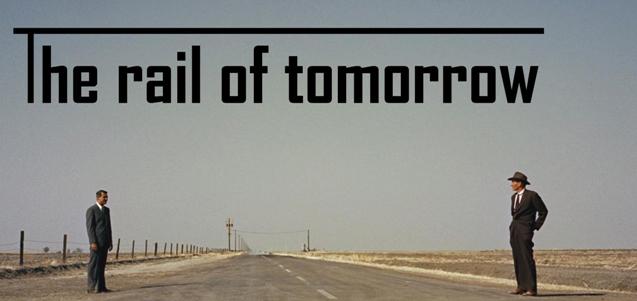
Nataniel R. wrote a very nice piece on the occasion of the film's own 25th anniversary, and the screencap at the top of his article is indebted to him for finding the defining moment in the film.

Roger Ebert, one of the critics who's best in tune with the intertwining of personal history, nostalgia, and art, wrote an especially fine review on the film's release.

Friday, January 4, 2013

The Best Films of 2012


Insofar as there’s no such thing as a “bad year” for movies, the process of whittling down dozens of films (in my case, in this year, 139) to a mere ten “best” features is sort of an impossibility, but as impossible activities go, one of the more fun ones.

A word about eligibility - if I can make a case for it being a 2012 film, it gets considered. Feel free to inquire about specifics.


Honorable Mentions


Prometheus
And to think I nearly eschewed my beloved "honorable mentions" this year. I usually reserve these slots for flawed films which I nevertheless feel merit consideration beyond that which they've yet received, but all of my favorites were easily justifiable this time out. Then an extended discussion on Twitter reminded me how much I really, really like Ridley Scott's Prometheus and how totally...well, I suppose it does deserve some haranguing, but not to the extent it has received, especially as much of it (not all, easy now) seems to stem from arrogant dissatisfaction that some measure of expectations were not met. Anyway, I've already written at length about the film, acknowledging its many, many flaws, but feeling it had it where it counts. Even if that area was, in all likelihood, completely unintentional.

Runners-Up (in no particular order)

Argo
All I can say is this one had me firmly in its clutches, and I wanted to jump for joy as the climax hit. It's got some pacing issues in the first half, but as soon as Affleck tells Cranston that the mission is a go, and Cranston goes tearing down the hall with the camera just a half-second behind him, this thing is just the best.

Magic Mike
About as much fun as the movies can offer, but when the drama hits, it hits. The greatest trick Soderbergh ever pulled was turning this into a hit.

Killer Joe
Electric and thrilling, this is what modern film noir should feel like - not a lot of referential throwbacks to deep-shadowed cinematography, but a pitch-black dive into greed, lust, sin, and desire that leaves a mark.

The Raid
Dance that leaves scars.

Cosmopolis
No, I don't totally "get" it, but I feel like I get it.

Holy Motors
Love every weird second, can't say I figured out a damn thing without some help, but boy what a joy this film has been to live in.

Declaration of War
The year's most overlooked film - heartbreaking, pulse-pounding, and often soaring beautiful.

Après Mai (retitled Something in the Air for U.S. release)
Olivier Assayas exercising his nostalgia muscle, but not without some deep self-criticism. As much an admiration of youthful passion as a biting look at how much that can be little more than a fashion choice.

Somebody Up There Likes Me
The most I laughed all year, and deeply insightful.

Tabu
One to revisit, knowing the heights to which the second half would soar.

The Deep Blue Sea
The story of Anna Karenina made somehow even more stagebound than Joe Wright's adaptation. Contains some of the finest shots of the year.

The Top Ten


10. Post Tenebras Lux
As mystifying, terrifying, affecting, and purely wrought as they come, Carlos Reygadas’ follow-up to his landmark Silent Light is perhaps not as Great, but at least as galvanizing. Ostensibly the story of a well-off family situated in a poor region of Mexico, Reygadas traverses this country and several others, emerging with a film I could not explain, but which I feel I understand on an almost chemical level. His audacious imagery speaks for itself, insofar as words never could communicate his artistic purpose, but the totality of the experience is so singular, so resolute, and so unwavering that to ignore it is an act of futility. It’s haunted me for months. It’s also the only film I’ve ever seen that almost started a fistfight in front of me, so there’s that.


9. Girl Walk // All Day
On the total opposite end of the spectrum is a pure blast of 70-some-minute joy. A dance film set to the Girl Talk album All Day, Jacob Krupnick’s debut film defies classification. Anne Marsen (in one of the finest performances of the year) plays The Girl, who breaks free of a stodgy ballet class, taking to the streets (and subways and boats and shops and motorcycles) of New York to find a home and purpose for the unbridled joy she feels in her freedom. Shot entirely on location, and mostly without the cooperation of various passers-by, it quickly transforms into a celebration of the power of art and live performance, the use for, and respect and celebration of the public space, the unshackling of consumerist allure, and more than anything, the true joy of communal creation. The perfect synthesis of several imperfect mediums, Girl Walk // All Day emerges as pure cinema, through and through.


8. Anna Karenina
Speaking of synthesizing several art forms into pure cinema, Joe Wright’s Anna Karenina brings together dance, theatre, and Technicolor movies to craft the most potent modern melodrama I’ve seen in I don’t even know how long. Its unashamed artifice (the film is set mostly in a rundown theater) reveals not only the performative aspects of public life central to the themes inherent in the text - Anna’s punishment for straying from her marriage is not a legal one, but societal - but also the blatant fake-ness of such films as these, which utilize British performers to play Russian characters. That it manages these playful aspects without subverting or narrowing the drama at hand is merely one of its many fine attributes, though perhaps the most important. Unafraid of her selfish character, Keira Knightley goes all-in as Anna, rendering a portrait not entirely sympathetic, but deeply moving in its excess. The same, I suppose, could be said of the film.


7. Amour
I’ve yet to find Michael Haneke’s intellectual approach distancing, insofar as he always matches it with a purity to his direction and an honesty in the performances that reveal the emotional undercurrents of his philosophies. Here, the two reach the kind of synthesis one can only dream of, in the story of an elderly man, Georges (Jean-Louis Trintignant), caring for his dying wife, Anne (Emmanuelle Riva). Both testing and fulfilling the promise of the title, the events that transpire - limited almost entirely to their apartment - are at times shocking or heartbreaking or even scary, but the quietly stated emotional undercurrent, which occasionally blossom into warm affection, are what makes this the resonant film that it is. Love stories are abundant in cinema, and it’s one of the things the medium does best, and this is the sort of total encapsulation of the concept that few filmmakers are given the license to explore.


6. Lincoln
This is my kind of Americana. From its opening scenes, Steven Spielberg’s Lincoln makes no bones about it - this is folklore, through and through. Abraham Lincoln may be a flawed man, unable to reconcile his passion for politics with his rather removed stance on his home life, but when he’s in his element, he is the master of the house. The particular house he must master is that of the Representatives, and the particular maneuverings required to secure the number of votes necessary to pass an amendment to the Constitution outlawing slavery provides the film no small measure of entertainment value, wrought so beautifully in the banter that screenwriter Tony Kushner revels crafts, and the so-precise-it’s-scarcely-being-noticed camerawork on behalf of Spielberg and longtime cinematography Janusz Kaminski. But it is Lincoln’s longer monologues, those about Euclid and past cases and British bathrooms and recognizing one’s moment in history when it has arrived for which I most dearly love the film. In these passages, Kushner’s superb dialect is unleashing into the kind of flowering, effervescent speech sorely missing not only in our day-to-day conversation, but in the cinema which seeks to represent us at our best. Day-Lewis’ performance isn’t just engrossing for the totality of his transformation, but for his character’s much-needed magnetism - Spielberg’s camera can scarcely look away, satisfying our own optic instincts.


5. Killing Them Softly
SO. AWESOME. Killing Them Softly is Samuel Fuller for the modern era, ripped from the headlines, pulsating with rage, and aesthetically adventurous at every turn. It’s an open wound that refuses to be mended until justice is done or revenge is exacted, whichever seems right at the time. The parallels between mob crime and the American economy are boldly stated and clearly underlined - lest anyone think writer/director Andrew Dominik is being too emphatic, I’m fairly certain that’s the point - but it’s the degree to which the American Dream in infused in these characters that I find most damning. We’re all told to find success doing what we do best, with those who turn out the best profit margin going the furthest; Killing Them Softly takes that edict to its natural conclusion. And miserable they are, seemingly pulled out from the sewers (in the case of Ben Mendelsohn’s character, perhaps literally) and put up in hotel rooms, these aren’t the charming gangsters that populate the cinema. These are scumbags, the lowest of the low, and their connection to the engineers, proprietors, and executors of our financial system is no mere talk, for neither is terribly concerned with the fallout of their quest for more greed. As scathing as they come, Killing Them Softly is the sound of the gates of Hell opening before you.


4. In Another Country
If Reygadas used his imagery to terrify, Krupnick to inspire, and Wright to move, Hong Sang-soo uses his to tell a joke. The opening shot contains a very simple camera adjustment that nevertheless inspired uproarious laughter in my theater, hooking us immediately while quietly seducing us to its charms. Consisting of three insanely simple stories about three French women (all played, superbly, by Isabelle Huppert) who visit a seaside town in South Korea, have common interactions with the locals of the area (most notably a lifeguard played by Yoo Jun-sang, who made me laugh out loud merely by walking), and in some way work out the struggles in their lives that brought them there, the film may not prove terribly deep, but its simplicity is somewhat deceptive as well. Provocative, light on its feet, and unabashedly charming, In Another Country doesn’t precisely fit the classical definition of a “crowd-pleaser,” but I’m unable to see it any other way.


3. Moonrise Kingdom
Yada yada, Wes Anderson sure is a specific artist, yada, if you don’t like the films he’s made before, you won’t like this one, yada yada. I don’t know at what point having a singular, specific style was declared to be a bad thing, but let me know when that one makes sense. Until then, Wes Anderson will continue to delight me, even if it would be unreasonable to expect them all to be this grand. This is about as stripped-down a film as he’s made, telling a simple story over a very short period of time that nonetheless builds towards the most spectacular climax of the year, one as boldly expressive as the whole of most other films. The building blocks are assembled so specifically and deliberately that one may miss a few details along the way, yet the film never leaves you behind.

Beginning with a series of careful pans around young Suzy’s house, then introducing us to the love of her pen-palling life, Sam, through the environment he has just escaped, Anderson seems almost to be answering his critics who say he builds dioramas first, characters second. By the time we settle in with Sam and Suzy, they turn out not terribly different from any other pre-teen kids, yet so distinct in their specific building and pairing that I was won over instantly. Their interactions are at turns endearing and terribly uncomfortable, as they negotiate the way people don’t always turn out exactly like you want them to be, but are somehow better for it. Anderson’s cast is filled with actors doing their best work in years, but it is Jared Gilman and Kara Hayward on whom the film rests, and with whom it so resoundingly succeeds.


2. It’s Such a Beautiful Day
I was familiar only with the name, and not the work, of animator Don Hertzfeldt before seeing It’s Such a Beautiful Day. Shortly afterwards, I ordered as much of it as my wallet could bear. Actually a trilogy of short films that Hertzfeldt retroactively turned into a feature (the final third shares its title with the whole, lest one is confused), the film is more or less about a very simply-drawn character named Bill, who we understand fairly quickly is in some degree of medical trouble, the severity of which is not immediately clear. But his various musings and specific modes of thinking are not common to someone with a healthy, engaged brain, to say the least. The film’s emotional tenor is at once removed and intensely engaged, expressing how something can be both hilarious and deeply tragic all at once, creating an uneasy tension not only in our engagement with the film, but in the very way we engage with our lives. That’s a pretty high calling for any piece of art to aspire to, one which I see the cinema only scarcely touch upon, and if I declare this to be anything less than the finest film of the year, let it only be the result of some personal preferences and modes of engagement. It is an astounding achievement, so full of the kind of warmth that will eventually destroy you.


1. The Master
The Master is almost overflowing with thematic concerns of varying weight, so much so that it’s tough to know where to begin, or in what manner to condense my appreciation and affection for it. More than anything, writer/director Paul Thomas Anderson wrangles the vulnerability he displayed in his earlier films into a form at once more manageable and more unwieldy. This is not the carefully-arranged, multifaceted breakdown of Magnolia, nor the perfectly-formed disintegration of There Will Be Blood - this is messy, and purposefully so. Even a scene as finely-crafted as that initial “processing” encounter between Freddie Quell (Joaquin Phoenix) and Lancaster Dodd (Philip Seymour Hoffman) leaves room for the wild, the inexplicable, and the unexpected, leaving us unable to possibly grasp its outcome even as its eventuality seems inevitable. “Pick a point,” Dodd challenges Freddie late in the film, belying the emptiness of not just the cult he’s founded, but the whole of American life in the postwar years during which this film takes place - Anderson matches his own challenge by speeding towards the wild blue yonder.

What I return to most is the final encounter between Dodd and Freddie, wherein Anderson wrings the most potent emotion he’s yet found in a discussion of dreams and balloons sent across nations and, somehow, not the first time a character sings to express something outside of his capacity for verbalization. This scene is so tender, so raw, so unblinking in its sideways depiction of longing and regret that to ascribe either emotion to any one element of either character is hopelessly reductive. It is the very essence of art, moving past that which is being depicted, past the act of depiction, and into an emotional stratosphere of its own creation. And for all its many attributes, it is for this that I love The Master. I can’t imagine the cinema will remain unchanged for it.

Friday, November 2, 2012

AFI A-Go-Go! and Other Housekeeping Measures


Not that you were likely expecting a sudden flood of content here, given the state of things (sorry, as always, for the paucity), but I'll be at AFI Fest from now through Thursday, and you can follow all of my ensuing coverage at Battleship Pretension. Already posted there are reviews of Olivier Assayas' Something in the Air and Christian Mungiu's Beyond the Hills (as well as an overview of the whole dang festival), and at CriterionCast I review Leos Carax's Holy Motors (from which comes the above image). All are excellent, well worth your time and, I would say "money" if they festival weren't free. But for those not in Los Angeles, yeah, it's worth that, too.

If you're in the mood for something a little more homebound, and you refuse to be limited by various region-coding measures, why not take a look at a recent Masters of Cinema Blu-ray release? Their new edition of Fritz Lang's The Testament of Dr. Mabuse is really extraordinary. And even if you just have a Region 1 DVD player, you can still enjoy their DVD edition of Samuel Fuller's two-fisted newspaper saga, Park Row.

Monday, October 8, 2012

Tony Scott in Stills


Tyler and David at Battleship Pretension were kind enough to invite my babbling ass on to discuss the career of Tony Scott, a filmmaker I adore and for whom my respect has grown immensely in the last week after watching (or rewatching) nearly all of his films. I only missed a three-film chunk in the late 80s/early 90s, but it proved to be one of the most invigorating weeks of moviewatching of my life. Anything that I watch in the next week or so will inevitably feel like a comedown.

One of the elements of Scott's work that I addressed on the show (albeit in a sideways manner) was this idea that he's a filmmaker of surfaces, an accusation that has been hurled his way since Top Gun. Not only do I feel that's kind of a surfacey complaint (so much of the appeal of cinema is surface-level; to dismiss it is to dismiss the joy of the movies), but I find his imagery to be infinitely more substantial than many of his contemporaries. On the show, I said this would be a gallery of images too weird to describe, and we certainly have those, but more than anything, this is a testament to just how sharp a filmmaker he was. As incredible as he was with capturing (and creating) kineticism and movement, his single frames - if you can manage to catch them - are stunning.

I didn't have DVD copies of everything I watched - notably The Hunger and Enemy of the State - but I made do as best I could. So let's dive in...

Wednesday, September 26, 2012

Pick a Point


For those more time-sensitive readers, the first three paragraphs may suffice, but I get at a lot more of the film, including the title, which is no small thing, in those that follow.

Near the end of Paul Thomas Anderson's The Master, Lancaster Dodd (Philip Seymour Hoffman), leader of a cult religion known only as The Cause, takes three members of his "family" - his daughter, Elizabeth (Ambyr Childers), her husband, Clark (Rami Malek), and an itinerant war veteran named Freddie Quell (Joaquin Phoenix) - out to the desert to engage in one of his many ill-defined exercises. Previously, he'd asked Freddie to walk from one end of a room to another, describing what he feels when he touches a wall and a window. Later (or perhaps simultaneously), he had Freddie and Clark stare at one another, saying whatever came to mind, and forbidding each to react to the other. The exercise in the desert is the first to have a name - it's called "Pick a Point."

In the scene immediately preceding this, Dodd had unveiled the apparently-long-promised "Book Two" to the assembled followers, which was met secretly with derision (Bill (Kevin J. O'Connor), who served as Dodd's welcoming committee in New York, simply tells Freddie "it stinks," and that they should have condensed it to a three-page pamphlet to hand out on the street), and in a more confrontational manner with heavy doubt. Helen (Laura Dern) is a devoted follower, having hosted Dodd and his self-assembled family in her home in Philadelphia, and has now traveled all the way to Phoenix with the urgency and eagerness of a Harry Potter fan, determined to read the new book the moment it's available. Indeed, Dodd has no sooner concluded his introduction than she's already on page thirteen, where she has found a major change to one of the foundational aspects of their belief system. When she, rather politely, asks Dodd about it, it's clear he's given it no thought, and is aghast at both her determine to undermine him and his own lack of conception of something he truly seems to believe (and perhaps a great many other things; much dramatic development in this film is pointedly not depicted).

So when Dodd takes these three out to the desert, and tells them to merely hop on his motorcycle and drive as fast as they can towards a point picked nearly at random, it's not hard to divine the larger thematic undertones. Dodd is now grasping at straws, determined to find purpose in whichever direction he stumbles (his cries of "yahoo!" as he speeds through the desert are not the most convincing). Yet unlike a character in a movie who becomes consumed by his own neuroses and flailing ambition, Dodd will actually become more successful thereafter. And unlike a story in a movie, writer/director Anderson tells his without any real concern towards dramatic structure, character development, or arcs. As is the experience for most of us, is certainly the experience for Freddie, and is the case with The Cause as a whole, The Master stumbles from one event to the next, not always concerned with creating connections between them, but finding commonalities; bowling without restraint towards its determined direction, then turning around when the wall doesn't provide the answers we seek.


As such, the hints the film provides at anything resembling a resolution will ultimately come up dry. Near the opening of the film, Freddie is shown in some sort of hospital undergoing psychological evaluation immediately following the end of World War II. And unseen speaker addresses the group, telling them that many people in the outside world won't understand the condition these men have, which we understand in modern parlance to be posttraumatic stress disorder. Then, it was more commonly called "shell shock." But to chalk up Freddie's erratic behavior (his predatory sexuality and violent outbursts are most common, but he's also given to depression, adolescent humor, alienation, and he alternates between attempting to appear much smarter than he is and satisfactorily owning his intellectual limitations) to merely the effects of war is a limiting perspective. For starters, his mother was committed to a mental institution and his alcoholism has turned towards utilizing household chemicals (and a little torpedo fuel), which can't be doing the holes in his brain any favors.

But more than that, Freddie is the expression of the void, the inherent denial of the constructs of civilization and surrender to our base instincts. Freddie will likely never be able to maintain a stable home, job, or relationship (romantic or otherwise), though he's shown to be such fine company that many will take him in along the way, and Peggy (Amy Adams), Dodd's wife, is probably right when she says he's beyond help (and even more right when she says he can't take this world straight), which she assumes is Dodd's primary reason for taking him in. It's both more personal and more sinister than that, though - in Freddie, Dodd sees a perfect method of expressing his belief system, both because Freddie is easily manipulated and because, in the course of Dodd's instructions, he reveals things even Dodd could have never dreamed up. Dodd's son, Val (Jesse Plemons), is correct to a certain degree when he says that his father is just making it up as he goes along, but in direct contrast to his supposed inspiration, L. Ron Hubbard, Dodd is never shown to be a writer of fiction. One man's "making it up as he goes along" is another's continual inspiration, and we see how he takes elements revealed to him by Freddie (laughter is a big one, but also Freddie's conclusion at the end of the wall-to-window exercise) and divines from them larger "truths." Dodd is searching for meaning every bit as much as his followers; he just had the initiative to start writing it down.

Hoffman and Phoenix play off of one another beautifully, opposed as often as in unison, but complementary of one another in the way the brain's right side more dominantly manages arenas of thought the left does not, and vice versa (called to mind forcefully when Dodd is thrown in a jail cell adjacent to Freddie, and we see their very divergent reactions to imprisonment in one beautiful frame). Phoenix's performance is the kind of towering feat that will be remembered by force, an actor whose own lack of restraint dares the film to similarly expose itself. It's the kind of "big" performance that some would assign merely to an actor's ego, were Phoenix not so willing to look so pathetic much of the time, never mind the success he achieves on whatever terms you assign. To say he plays a big role in opening up Freddie's psyche would reflexively undermine an actor's inherent contribution, but it's hardly all there on the page - Phoenix reacts in ways you would never expect, constantly calling into question your conception of his character, a notion matched by the film, aesthetically. Especially at the start, cinematographer Mihai Malaimare, Jr. lights Phoenix so that he almost looks like Two-Face (yes, the Batman villain), deep and shadowy on one side with almost exaggeratedly divergent eyes, intuitively asking what else about this man is will go unrevealed.


Indeed, as much happens off screen in The Master as it does on. We don't get a precise fix on the timeline, but several unseen events are directly alluded to (Dodd and Freddie's initial meeting, the scenes in which anyone other than Dodd learns about Freddie's background, the moment of decision at which Freddie decides to leave The Cause), never mind the many conflicts that are left unresolved. We never find out what happened to the salesgirl who Freddie drags out of the store with him following his violent assault on a customer, nor the man whom he might have killed with his homemade alcohol. We never learn exactly what was in the letter from Doris - we understand it to be unwelcome, but Freddie is surprised to hear she's been married three years when he finally goes back to Massachusetts to try to talk to her. Indeed, we don't even learn much of Freddie's life immediately following the war, which leaves a reasonable five-year gap between then and when he meets Dodd, who states the year to be 1950 in his initial attempt at "processing" with Freddie. We get pieces of his life, and generally understand him to be a wanderer, but five years is a long time, and Anderson makes no apologies for the inherent inability to fully tell of that span in a few minutes. But he does get at the nature of that period of Freddie's life, just as he gets at the nature of the events and people to follow, however elliptical his expression (never mind that the drama he does depict is absolutely arresting cinema). Rather than feel frustrated by the film's limited viewpoint, I felt freed, invited much closer into a truer experience of life in which meaningful events cannot be sufficiently summarized in a two-hour film. We're trusted with a collection of moments that add up to something significant, but which the film doesn't come out and state; a sense of longing and loneliness and the vague hope of finding some truth in our relationships.

Which brings me to the matter of the title. Anderson has long expressed an aversion to titles that are stated within the film itself, and his work prior to this bears that out, so it's worth considering what, exactly, "The Master" is all about. Most simply, many people refer to Dodd as "Master," much more often than he's called by his real name (I think only the police and judge use it in addressing him, but I may be wrong), and Hoffman conducts himself as something of a master of ceremonies. I like what Bill R. wrote - "Dodd is an ideal character for [Hoffman], as it lets him do just about everything an actor could want to do." Hoffman has enjoyed quite a career so far, especially in the years since Capote, for which he won an Oscar. He's been able to be as wild and untamed as only a film like Mission: Impossible III would allow, a forceful and determined presence in Doubt and Before the Devil Knows You're Dead, and extraordinarily sensitive to the human experience in Synecdoche, New York and Jack Goes Boating, his directorial debut. Lancaster Dodd seems custom-tailored for him, utilizing all his talent for humanistic comedy and authoritative presence, while also revealing quite a bit more of his range - his character's desire to hide his own self doubt. It's a tricky line to toe, but his Dodd is never fully in control nor fully without a grasp on the situation.

But getting back to the title, there is also Dodd's treatment of Freddie, as a friend, certainly, but more to the point, man's best friend. Constantly using condescending compliments like "good boy" and "you're the bravest boy I've ever known," never mind his more aggressive statements, when he might as well be whacking Freddie over the nose with a newspaper, Dodd is taking his manipulative abilities to their natural conclusion. And his general ability to wrangle Freddie to do his bidding, typically expressed a series of tricks designed for his guests' amusement, becomes more and more grotesque as their relationship evolves. Soon after their initial encounter, Dodd gives a speech to the people on his boat about taming a dragon, and the way Anderson cuts between Dodd and Freddie provides a clear link, and a hint of things to come. Dodd is not purely manipulative towards Freddie anymore than a man is to his dog, but there's little doubt as to who Dodd feels is truly the "master" of their relationship. Until the end.


The confrontation between Dodd and Freddie in England left me reeling, and is the chief reason it took me until the next morning to really conceive of my own feelings towards the film (both times I saw it, at that). It's not the choice I would have expected Anderson to make, or the natural choice for anyone to make, but once again, The Master is not the kind of story we're used to seeing. Somehow, Hoffman and Phoenix wring so much emotion from this scene that's all about past lives and Paris and losing only two balloons in the worst winter on record and a heartbreaking rendition of a song I'd never heard, so that when the former tells the latter that if he leaves, that he never wants to see him again, and if they should meet in the next life, he'd be his sworn enemy..."or you can stay," we're just about in tears along with Freddie. This is as close as Dodd can get to pleading, but it's not something Freddie can satisfy.

Dodd gives him a compliment I'm not sure he entirely means, nor would he entirely deny (characteristic of many of his statements), that he admires Freddie for finding a way to live "without a master," which points not just to their past relationship but towards Dodd's own sense of place in the universe. If Freddie is commendable for this, then Dodd, too, serves someone, or feels he does. There are indications that Peggy holds this position, but the way he speaks points to an existential sadness greater than a man merely trapped in a bad marriage (one of many). It's perhaps that he's a man trapped by his own designs, forever struggling to live up to the image he's built of himself, and which others have expected him to.

The final true scene of the film is between Freddie and a woman he picks up in a bar. They're having sex and, contrary to our conception of Freddie's sexual impulses (the man is forever a mystery), it's actually very gentle, caring, and fun. But when he diverts for a second to the intellectual sparring that initially bonded he and Dodd, he opens up the possibility of alternate lives. She says, "I hope this is not my life."* Anderson repositions her upright, fully exposed (in several ways), and for just a moment, deeply sad, until she and Freddie go back at it. And The Cause promises at least that much; that whatever your troubles in this life, they are but a sliver of the totality of your soul's experience. This is not to apologize for a cult mentality, and I don't think Anderson is either - rather, he's revealing the inherent sadness that comes from searching and not finding, from never being truly certain that anything more lay beyond the temporal, and that the void Freddie expresses may be closer to the truth than the absolution Dodd promises. Among a great many other things, of course.

*I deeply regret that I cannot recall her specific phrasing, but it's close to this.

Thursday, September 13, 2012

Busby Berkeley's Spectacular Humanism


As one would imagine with a film not only choreographed, but totally directed by Busby Berkeley, 1943's The Gang's All Here is not terribly motivated by, nor concerned with, the emotional tension for which many other directors would mine its premise. Concerning a soldier who falls for a nightclub singer, in spite of his unspoken, family-bred engagement to a nice suburban type, and the various machinations that result in them all coming together for a weekend at the country, Berkeley's Technicolor wartime spectacular doesn't even approach the conflict with a depth of a romantic comedy. Rather, his premise allows him to move effortlessly from one jaw-dropping musical number to the next, a never-ending carousel of the set pieces typically reserved for the finale of the films with which he was previously involved (Gold Diggers of 1933, Footlight Parade, etc.).

Yet I don't buy the tag that Berkeley purely exploited the human form for his own mechanistic whims. For one, The Gang's All Here contains a great deal of pictorial romance, from the gleaming (and, it should be noted, gloriously inauthentic) starlight to the opening shot, bathed in near-total darkness, to some visions towards the end that I dare not spoil by failing to describe them. Let's just say Berkeley was very attuned to the possibilities of the "moving picture."


But more than anything, Berkeley's work feels overwhelmed with the joy of collaboration, the possibilities that exist when you throw people together to create one glorious collage. And rather than feel dehumanized, there's actually a charming disharmony to the movements, a sometimes slight, sometimes rather pronounced reminder of a number's underlying humanity. A couple people will come in slightly off-beat, or one will land just off their mark, and while it's easy enough to say, well, you can only get it so perfect, that assumes Berkeley was aiming for perfection, which I doubt. These are, in essence, grand experiments, the kind that can only be tested on a large scale, and it feels like Berkeley was as interested in the results as he was in his vision.

To take that point a step further, this kind of massive collaboration casually builds up the necessary public morale at an uncertain time, certainly through the Depression but especially during the war years. A "we're all in this together!" mentality wasn't just espoused by the propaganda machine; it was embedded in the public conscious (and, for that matter, conscience). Without coming right out and saying it, Berkeley was illustrating what amazing things can be created when people pool their talent and resources. Which, to me, is far more inspiring than the standard triumph-of-the-individual narrative so pervasive in Hollywood cinema of any era.

The Gang's All Here is playing for the next few days at Cinefamily in Los Angeles in a brand-new, astounding 35mm print. Beyond the more esoteric qualities to which I alluded above, it's just a gas of a picture, constantly keeping your feet a-tapping and your face a-smiling. See it.

Wednesday, September 5, 2012

Naruse is on Fire


Okay, so that post title only works if you mispronounce his name (NA-roo-say is the correct way), but I never was good at titles. All of this is to say that over at CriterionCast, we've gone positively nutty for the largely-overlooked, but supremely talented Japanese filmmaker Mikio Naruse. In addition to my ongoing series on those films of his available on Criterion's Hulu channel, David Blakeslee and Robert Nishimura were kind enough to ask me to join them for the second episode of their podcast, The Eclipse Viewer, to discuss his surviving silent films. Even without my involvement, I'd be happy to recommend the program, into which they put an incomparable amount of work, diving into research and analysis, making for an incredibly informative monthly show. They mentioned to me off-air that their aim is for these episodes to serve as the supplements that Criterion's Eclipse series lacks, and they do a hell of a job at that.

It goes without saying that if you haven't waded into Naruse's silent work, or any of his films for that matter, they are an absolute necessity. Everyone in the West tends to have "their guy" when it comes to Japanese cinema, and while I love Kurosawa and Ozu (and Mizoguchi, but I'm really just getting started there), I've quickly become overwhelmed by Naruse's passion and formal precision. His silent work is considerably rougher than that which follows, so perhaps start with When a Woman Ascends the Stairs or Yearning and then go back to see where he comes from, but with a little contextualization, few cinephiles would be hard-pressed to not be immediately drawn into these silent films (all of which are also available on Criterion's indispensable Hulu channel).

So let me, David, and Robert provide that, and give the latest episode of The Eclipse Viewer a listen. Whole worlds await you.